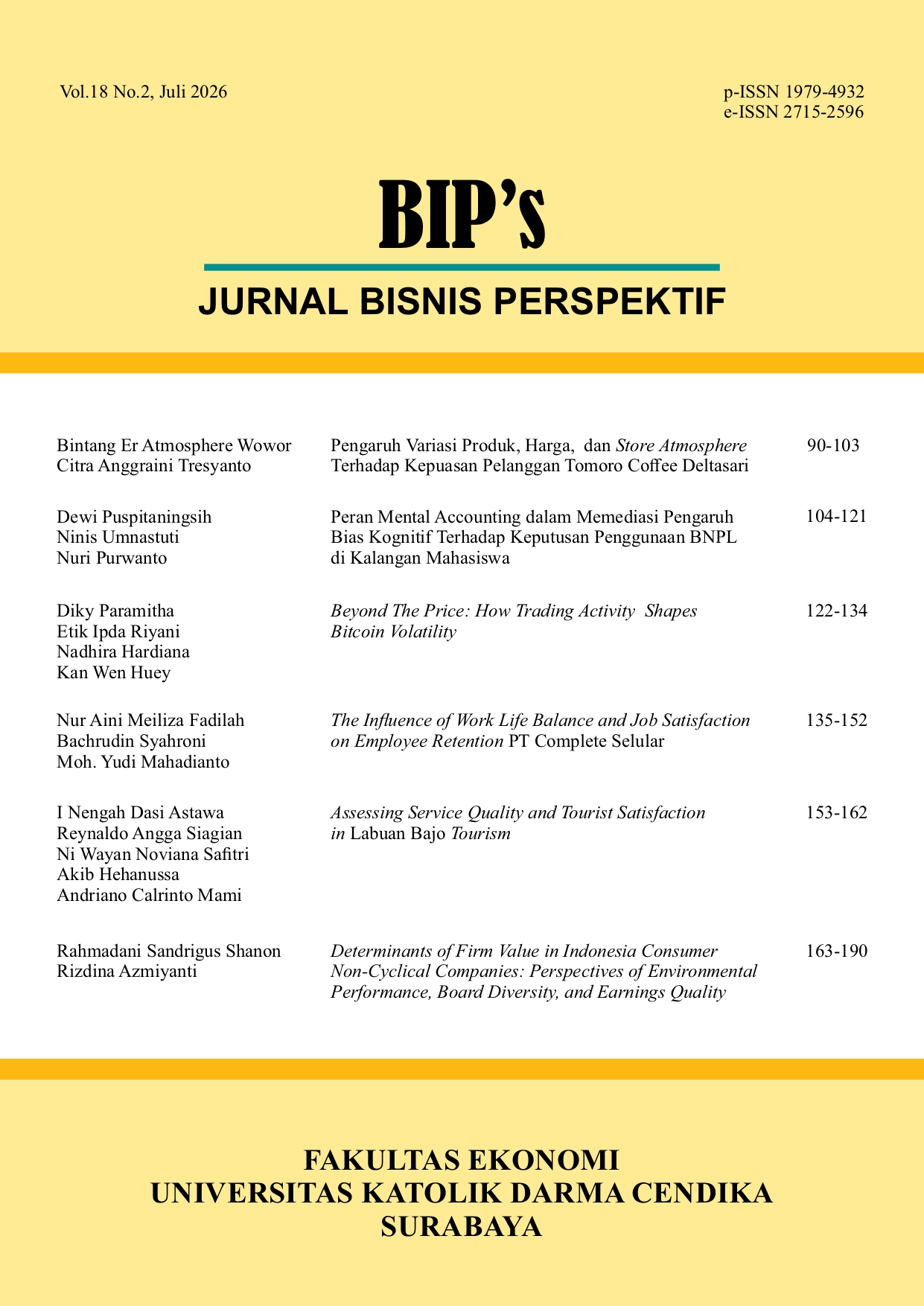
Peran Mental Accounting dalam Memediasi Pengaruh Bias Kognitif terhadap Keputusan Penggunaan BNPL di Kalangan Mahasiswa
DOI:
https://doi.org/10.37477/bip.v18i2.904Keywords:
bias kognitif;, mental accounting;, buy now pay later (BNPL);, perilaku keuangan;, teknologi finansial;Abstract
The rapid expansion of Financial Technology (FinTech), particularly Buy Now Pay Later (BNPL) services, has transformed consumer behavior among university students. However, this convenience often leads to suboptimal financial decisions due to cognitive biases and mental accounting practices. This study aims to empirically examine the role of mental accounting in mediating the effect of cognitive bias on BNPL usage decisions among students. A quantitative approach with a causal explanatory design was employed, involving student respondents in Jombang Regency selected through convenience sampling. Data were analyzed using Partial Least Squares Structural Equation Modeling (PLS-SEM) with SmartPLS 4. The results indicate that cognitive bias has a positive and significant effect on mental accounting, and mental accounting positively and significantly affects BNPL usage decisions. However, cognitive bias does not have a significant direct effect on BNPL usage decisions. Importantly, mental accounting is found to fully mediate the relationship between cognitive bias and BNPL usage decisions. These findings confirm that mental accounting serves as a key psychological mechanism that translates cognitive distortions into consumptive behavior within the digital financial ecosystem. This study contributes to behavioral finance literature and offers practical implications for enhancing financial literacy programs and designing more responsible BNPL features for young consumers.
References
Abu Seman, S. A. (2025). Convenience over cash: Understanding why Gen Z embrace Buy Now Pay Later services. Journal of Information and Knowledge Management, 15(2), 122–133. https://doi.org/10.24191/jikm.v15i2.8980
Afisti, E., Sujadi, E., & Ahmad, B. (2024). Pengaruh Kontrol Diri dan Konformitas Teman Sebaya Terhadap Perilaku Konsumtif Berbelanja Online pada Mahasiswa. Psikodidaktika: Jurnal Ilmu Pendidikan, Psikologi, Bimbingan Dan Konseling, 9(2), 597–616.
Ajzen, I. (2006). Constructing a theory of planned behavior questionnaire. Amherst, MA.
Anastasya, I. N. (2025). Pengaruh Literasi Keuangan, Kontrol Diri, Dan Diskon Terhadap Perilaku Pembelian Impulsif Dalam Marketplace Pada Mahasiswa Di Purwokerto. Skripsi.
Annisa, Z. A., & Indrarini, R. (2025). Pengaruh Islamic Financial Literacy, Mental Accounting, dan Subjective Norm terhadap Perilaku Pengelolaan Keuangan Mahasiswa KIP Kuliah dengan Locus Of Control Sebagai Variabel Intervening. Jurnal Ekonomika Dan Bisnis Islam, 8(3), 24–47.
Aswirah, A., Arfah, A., dan Alam, S. (2024). Perkembangan dan dampak financial technology terhadap inklusi keuangan di indonesia: studi literatur. Jurnal Bisnis Dan Kewirausahaan, 13(2), 180–186. https://doi.org/10.37476/jbk.v13i2.4642
Fayliencent, I. N., Solissa, F., Turor, M., & Astuti, P. A. W. (2025). Mental Accounting Bias Terhadap Perilaku Keuangan: Systematic Literature Review. Jurnal Akuntansi Dan Manajemen, 36(3), 223–242.
Gębski, Ł., Daw, G., Waliszewski, K., Folwarski, M., & Druhov, O. (2025). Could the popularity of BNPL result from consumers’ misconceptions about the financial product’s? Kwartalnik Nauk o Przedsiębiorstwie. https://doi.org/10.33119/KSzPP/2025.3.6
Grzelczak, M., & Soliwoda, M. (2022). Do non-cash payments affect economic growth? Empirical evidence from EU countries. Zeszyty Naukowe Politechniki Śląskiej. Organizacja i Zarządzanie, 166.
Hamizar, A., Nacikit, M. R., & Holle, M. H. (2024). Perilaku Adopsi Cahsless Sebagai Dampak Insentif Keuangan (Cashback, Diskon & Program Loyalitas). Advantage: Journal of Management and Business, 2(1), 49–59.
Hamzah, H. (2025). Berilmu Tapi Boros: Paradox Literasi Keuangan Mahasiswa Native. JIIP (Jurnal Ilmiah Ilmu Pendidikan), 7(12), 14409–14420. https://doi.org/10.54371/jiip.v7i12.9260
Harahap, E. E. (2024). Analisis intensi penggunaan internet banking di kalangan dosen. UIN Syekh Ali Hasan Ahmad Addary Padangsidimpuan.
Hidayat (2022). The Analysis of the “Buy Now, Pay Later” Use Intention in Indonesia. International Journal of Current Science Research and Review, 05(07). https://doi.org/10.47191/ijcsrr/v5-i7-19
Hidayat, R. T., & Darmawan, D. (2025). Pengaruh Persepsi Risiko Terhadap Keputusan Pengguna Pinjaman Online. Jurnal Penelitian Multidisiplin Nusantara, 6(1).
Hisham, N. A., Razali, N. F., Aziz, N. A., Jamel, N. E. S. M., Aziz, N. A., dan Ahmad, N. S. (2025). A Comprehensive Review of Buy Now Pay Later (BNPL) Influence Factors on Young Consumer Spending Behaviour in E-Commerce Platform. International Journal of Research and Innovation in Social Science, 1928–1940. https://doi.org/10.47772/ijriss.2025.914mg00145
Ismia, F. K., Udzikrilah, S., & Pratiwi, P. D. (2024). Pengaruh mental accounting dan literasi keuangan terhadap financial behaviour dengan dimediasi gaya hidup konsumtif mahasiswa aktif di dki jakarta. JIMEKA (Jurnal Ilmiah Mahasiswa Ekonomi Akuntansi), 9(2), 118–130. https://doi.org/10.24815/jimeka.v9i2.30045
Jörnell, C. (2025). Credit at checkout: Present bias and Klarna behavior in Sweden. Lund University.
Jose, A., Kelly, J., King, M., & McCarthy, Y. (2025). Buy now, spend more, pay later: Behavioural mechanisms of Buy Now Pay Later products. Central Bank of Ireland.
Komalasari, A. E., & Firmansyah, H. (2025). Jebakan Paylater Era Flexing: Studi Integratif TPB terhadap Literasi Keuangan Digital, Kontrol Diri, dan Gaya Hidup Konsumtif Gen Z di Kota Bandung. RIGGS: Journal of Artificial Intelligence and Digital Business, 4(3), 8129–8142.
Mafo, S., Prasasti, N. D., & Abella, P. (2024). Implikasi mental accounting, prospect theory, framing dan overconfidence terhadap pengambilan keputusan investasi bagi. Journal of Management and Innovation Entrepreneurship (JMIE), 1(4), 862–872.
Mahapatra, M. S., Raveendran, J., & De, A. (2018). Mediating Role of Mental Accounting in between Financial Cognition and Personal Financial Planning of Indian Households. Social Science Research Network. https://doi.org/10.2139/SSRN.3257860
Nagina, R. (2024). Mental Accounting. Advances in Business Strategy and Competitive Advantage Book Series, 161–194. https://doi.org/10.4018/979-8-3693-9380-2.ch007
Neto, L. F. F., Costa, L., & Teixeira, W. M. (2023). Decisões financeiras além da razão: um Estudo com discentes de graduação em uma escola de Negócios sobre finanças comportamentais e a “teoria do prospecto". Revista Caribeña de Ciencias Sociales, 12(2), 703–726. https://doi.org/10.55905/rcssv12n2-014
Permatasari, R., dan Hidayah, N. E. F. (2024). Analisis Faktor Yang Mempengaruhi Generasi Z Dalam Pengambilan Pinjaman Melalui Aplikasi Online. ProBank: Jurnal Ekonomi Dan Perbankan, 9(1), 102–112. https://doi.org/10.36587/probank.v9i1.1743
Pertiwi, T. K., Joseph, C., Warmana, G. O., Khoirotunnisa, F., & Hariyana, N. (2025). Exploring platform trust, borrowing intention, and actual use of PayLater services in Indonesia and Malaysia. Journal of Risk and Financial Management, 18(5), 255. https://doi.org/10.3390/jrfm18050255
Prawitasari, D., Kadarningsih, A., dan Ahmad, M. Y. (2025). Financial Behavior of Gen Z Students: Digital Lifestyle, FoMo, and Financial Literacy. Solusi (Semarang), 23(3). https://doi.org/10.26623/slsi.v23i3.12359
Prelec, D., & Loewenstein, G. (1998). The red and the black: Mental accounting of savings and debt. Marketing Science, 17(1), 4–28.
Ringle, C. M., Sarstedt, M., & Hair, J. F. (2022). Partial least squares structural equation modeling: Rigorous applications, better results and higher acceptance. Long Range Planning, 55(4), 102163. https://doi.org/10.1016/j.lrp.2021.102163
Selfianti, S., Arsal, M., & Badollahi, I. (2025). Pengaruh Literasi Keuangan Dan Digital Payment Terhadap Minat Belanja Mahasiswa: Kepercayaan Sebagai Variabel Mediasi. Owner: Riset Dan Jurnal Akuntansi, 9(2), 1508–1518.
Serang, A. E. D., Pamungkas, A. D., & Nirmala, T. (2025). Paylater Lifestyle: Financial Solution or Debt Trap for the Younger Generation. Nomico., 2(2), 9–16. https://doi.org/10.62872/vxvc2903
Silva, E. M., Moreira, R., & Bortolon, P. M. (2023). Mental Accounting and decision making: a systematic literature review. Journal of Behavioral and Experimental Economics, 107, 102092. https://doi.org/10.1016/j.socec.2023.102092
Sukma, V. M., Juanda, A., & Leniwati, D. (2025). Makna utang dan praktik mental accounting: studi kualitatif terhadap nasabah PT. Pegadaian Syariah di Madura. Entrepreneurship Bisnis Manajemen Akuntansi (E-BISMA), 421–435.
Syifa, N. N., Chandra, Y. U., & Lindawati, L. (2025). A study on determinants influencing the adoption of buy now, pay later (BNPL) as a payment method using the Technology Acceptance Model 2: Indonesian case. https://doi.org/10.1109/IAICT65714.2025.11100799
Thaler, R. H. (1999). Mental accounting matters. Journal of Behavioral Decision Making, 12(3), 183–206.
Wang, X. (2025). The impact of use now, pay later on the structure of consumer debt: Reshaping and challenges. https://doi.org/10.2991/978-94-6463-811-0_112
Yuliana, F., Amalia, F., & Ariyanti, O. (2025). Pengaruh Layanan Paylater Terhadap Perilaku Konsumtif Generasi Muda di Indonesia. Journal of Economic Studies, 1(1), 33–38.
Zairimadana, H. R. (2025). Pengaruh Status Quo, Herding Behavior, Representativeness Bias Dan Mental Accounting Terhadap Keputusan Investasi Di Pasar Modal Dengan Risk Tolerance Sebagai Variabel Moderasi Dalam Perspektif Bisnis Islam (Studi Pada Investor Yang Terdaftar Di Bursa Efek Indonesia Kota Bandar Lampung Tahun 2022-2024). UIN Raden Intan Lampung.
Downloads
Published
How to Cite
Issue
Section
License
Copyright (c) 2026 Nuri Purwanto, Ninis Umnastuti, Nuri Purwanto

This work is licensed under a Creative Commons Attribution-NonCommercial-ShareAlike 4.0 International License.
Authors publishing in this journal agree to the following terms:
- The author retains copyright and grants the journal rights of first publication with the work simultaneously licensed under a Creative Commons Attribution ShareAlike License License that allows others to share the work with acknowledgment of the author's work and initial publication in BIP's: Journal of Business Perspectives.
- Authors may include separate additional contractual arrangements for non-exclusive distribution of the published version of the journal (e.g., submit to an institutional repository or publish in a book), with an acknowledgment of the original publication in this Journal.
- Authors are permitted and encouraged to post their work online (e.g., in institutional repositories or on their websites) before and during the submission process, as it can lead to productive exchanges, as well as citations of previously published work.
Each author is expected to complete the copyright process with a document of the originality of the manuscript, the templated document is below:
7.png)